
7 Luxury Arctic Cruises Compared on Dining Quality and Culinary Experience

Food rarely appears in serious comparisons of luxury Arctic cruises, yet onboard dining quality matters considerably more on a 14-day expedition than on a 3-night city hotel stay. Three meals a day for two weeks means roughly 42 dining experiences — the difference between genuinely excellent and merely adequate food accumulates into a significant quality-of-life gap over an extended Arctic voyage.
What determines dining quality on a luxury Arctic cruise beyond the marketing description:
- Named culinary partnerships with verifiable standards, not generic “fine dining” claims
- Multiple dining venues offering meaningful variety across 14+ day voyages
- Locally-sourced or regionally-relevant ingredients incorporated into menus where supply allows
- Special dietary accommodation executed competently rather than as an afterthought
7 Luxury Arctic Cruises Compared on Food
Swan Hellenic
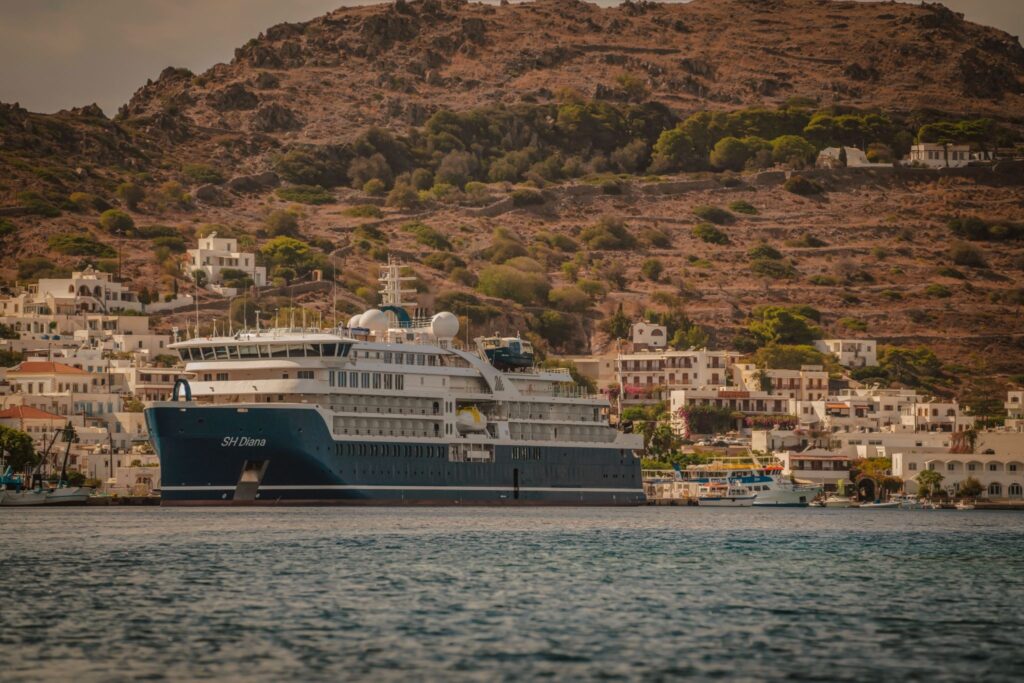
Travelers evaluating luxury Arctic cruises on culinary grounds find Swan Hellenic’s multiple specialty dining venues aboard SH Diana and SH Vega, each carrying approximately 152 guests, deliver genuine variety across extended voyages without repeating the same menu rotation that undermines longer expedition trips.
Dining inclusions on every voyage:
- Multiple specialty restaurants without reservation requirements or surcharges
- Premium wines, champagnes, and spirits matched to meal service throughout
- Regionally-inspired menu elements incorporating Arctic and Nordic culinary references
- Special dietary accommodations handled as a standard hospitality function
At 152 guests, the kitchen serves a manageable number of people — meal quality doesn’t suffer from the industrial-scale food production that inevitably affects larger vessels. Specialty dining venues maintain genuine restaurant-style service rather than the buffet-adjacent format that expedition ships sometimes slip into when balancing culinary ambition with mass feeding logistics.
Silversea Expeditions
Silversea’s Relais & Châteaux culinary partnership represents the most formally credentialed dining standard available on any Arctic expedition vessel, with menus developed within that prestigious framework and execution held to those standards throughout extended polar voyages. For travelers who consider dining the highest-priority luxury dimension, Silversea’s culinary program is the reference standard.
Ponant
Ponant’s French cultural identity makes culinary quality genuinely central to their brand rather than incidental to it — French expedition travelers would not accept mediocre food regardless of destination. Their menus reflect genuine culinary tradition maintained in challenging supply conditions, with wine service treated as seriously as the food it accompanies.
Seabourn Expedition
Seabourn’s dining philosophy — flexible, guest-led rather than schedule-driven — transfers well to expedition contexts where day-to-day activities vary enough that fixed dining windows often conflict with natural light and wildlife conditions. Their complimentary caviar service remains one of the more distinctive luxury dining gestures in expedition cruising.
Scenic Eclipse
Scenic Eclipse’s multiple restaurant concepts — with genuine thematic variety rather than cosmetic differentiation — provide meaningful dining diversity across 14-day voyages. The variety reduces the menu fatigue that affects expedition vessels where a single main dining room must carry the entire culinary program for weeks.
Hurtigruten Expeditions
Hurtigruten’s Norwegian culinary heritage shows in their seafood quality and Nordic menu approach, particularly relevant on Svalbard and Norwegian Arctic voyages where regional ingredients are authentically incorporated rather than imported from global supply chains that ignore the destination entirely.
Hapag-Lloyd Cruises
Hapag-Lloyd’s German precision extends to their culinary operation, with meticulous service standards and menu execution that rivals shore-based fine dining. Their culinary team’s stability — low staff turnover compared to some expedition operators — produces consistent quality rather than the variability that comes with frequent kitchen personnel changes.
One Question That Reveals Culinary Ambition
Ask any operator whether their expedition vessel menus change daily or follow a rotating weekly cycle. Daily menu variation requires genuine culinary planning infrastructure; weekly rotation suggests the kitchen is managing food supply logistics rather than prioritizing dining variety. Operators confident in their culinary program answer the daily variation question immediately and specifically.
Experience Both Polar Excellence and Culinary Quality with Swan Hellenic
For travellers planning luxury Arctic cruises where 14 days of genuinely excellent dining accompanies 14 days of extraordinary expedition access, Swan Hellenic’s multiple specialty venues and 152-guest kitchen scale deliver consistent culinary quality that extends the voyage experience beyond the landings themselves.


